Stalkers' offspring
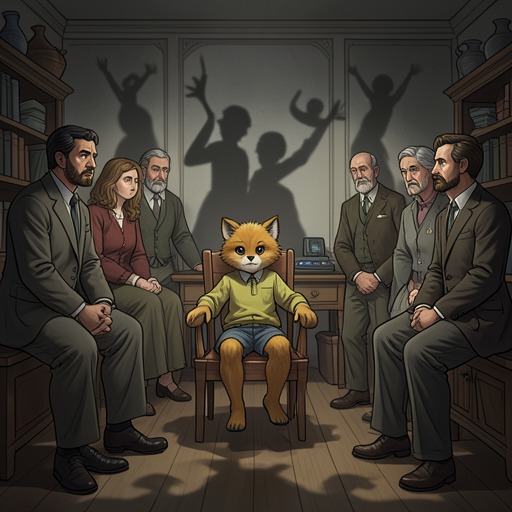
Roadside PicnicStalkers’ offspring is the fear that children conceived by those who enter the Zone may be born physically unlike other people, and the social suspicion attached to that possibility. The idea presses on Redrick Schuhart’s private life: it intrudes when he longs simply to hold Guta’s hand, shapes the objections raised against her pregnancy, and returns in the sight of Monkey’s golden fur. What begins as a warning about an imagined future becomes part of the intimate present of a family.
Fear and Intimacy
After the Zone, Redrick finds even ordinary closeness difficult to imagine. Walking alone beneath the sun, he suddenly wants to see Guta and hold her hand for a while. The modesty of the wish matters: he does not picture grand reconciliation, only touch. But thoughts of what stalkers’ children might become interrupt that desire, binding the prospect of family to an uncertain bodily future. The thought turns quickly toward alcohol; instead of seeking Guta, he tells himself that what he really needs is a bottle of hard liquor. The possibility of a child thus appears alongside Redrick’s impulse to withdraw from the tenderness and responsibility that family life entails.
The fear is not presented as a settled medical account of what stalkers’ children will be. It appears as a story that hangs over the characters, powerful enough to shape decisions without resolving what a child’s life must be like. Its force lies partly in that uncertainty: the possibility of difference is treated by others as a reason to reject the pregnancy, while Redrick encounters it as an anxiety he cannot simply reason away.
Guta’s Decision
Guta tells Redrick that her mother wants her to have an abortion, but that she does not want one. She wants to have his child. Redrick has already walked several steps before understanding what she has said; when its meaning reaches him, he is stunned and cannot make sense of it. His bewilderment registers the distance between the choice Guta has made and his own readiness to face it.
Guta explains the objections directly: her mother says that a baby by a stalker will be a freak, that Redrick is a wanderer, and that the two of them will have no real family. His freedom is precarious as well; today he is free, tomorrow he may be in jail. Guta knows these warnings and says she is prepared for anything. Her decision does not erase the fear or promise that their life together will be secure. Instead, she refuses to let stigma and uncertainty decide the pregnancy for her. In this exchange, the imagined abnormality of a stalker’s child becomes a concrete pressure on a woman’s choice, while Guta’s resolve gives the child a place in a family not yet guaranteed a stable future.
Redrick’s reaction makes the contrast especially sharp. Earlier, his longing for Guta had collapsed into the need to drink; now Guta names a shared future that he had not managed to anticipate. Her commitment answers his retreat, but the scene does not turn his shock into immediate confidence. The idea of stalkers’ offspring therefore marks a fault line within the relationship: Guta can accept uncertainty as part of having the child, while Redrick is still struggling to comprehend what that commitment asks of him.
Monkey and the Visible Difference
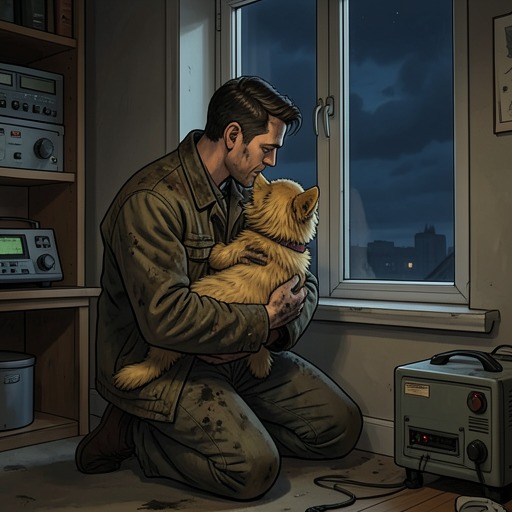
Later, at home, Redrick carries a basket into the storeroom and looks into the bedroom, where Monkey is sleeping peacefully beneath a crumpled blanket. He sees the warm, soft child breathing heavily, and notices that her nightie has ridden up. He strokes her back, covered with golden fur, and is again astonished by how silky and long it is. He badly wants to pick her up, but fears waking her; he is also filthy and permeated with death.
The scene gives bodily difference a tenderness absent from the warnings Guta recounts. Monkey’s fur is not described from the outside as a public problem or an argument in a dispute over whether a child should be born. Redrick encounters it through touch and care: its warmth and silkiness draw his hand, and his desire to lift her is checked by concern for her sleep. Yet his astonishment remains, and the text does not present the difference as ordinary or explain its origins away. The child’s body holds together affection and strangeness, making the fear of stalkers’ offspring an intimate fact of family life rather than a distant prediction.
Meaning in the Family
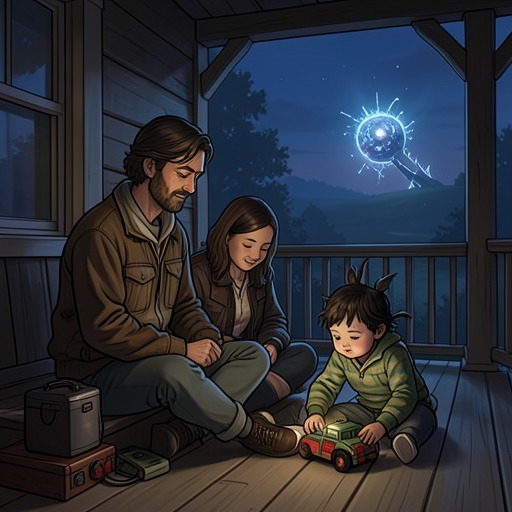
Across these moments, the idea changes emphasis. In Redrick’s solitary thoughts, a stalker’s child is part of the alarming stories that obstruct even a simple wish to hold Guta’s hand. In Guta’s conversation, it is a label used to argue that the baby will be a freak and that no real family can follow. In the bedroom, Monkey’s golden fur is encountered as the unmistakable texture of a particular sleeping child whom Redrick wants to hold.
The evidence does not supply a general account of all stalkers’ children or settle what their futures will be. It instead places the fear inside a sequence of relationships and choices: Redrick’s longing gives way to drinking, Guta asserts her wish to continue the pregnancy, and Redrick later touches Monkey with gentleness even as he registers her unusual fur. The motif’s significance is this tension between prediction and lived attachment. A child may be spoken of as a warning or a freak before birth; within the household, the child is also warm, sleeping, and loved.